
BEFORE THE PO
What buyers check before they place a PO
Five things come up in almost every RFQ. Here is how we answer them before a price is agreed.
- “Can you actually hold 0.0005 in on 7075?” On this part we hold 0.0008 in in production. If 0.0005 in is mandatory, it means a special fixture, temperature-controlled machining and full CMM inspection, and we re-quote it as such — not quietly price it as if it were routine.
- “Is freight and duty inside the DDP number?” When we quote DDP, freight, duty, customs clearance, brokerage and final delivery are all inside the number. If you would rather compare FOB or EXW, we quote that too, itemised.
- “Do we get measured values, or just a pass stamp?” CMM reports carry actual readings. Features outside CMM scope are checked with micrometers, calipers, thread gauges and a vision measuring machine, and the gauge used is logged on the per-operation self-inspection record.
- “Will you tell us which tolerances to relax, instead of just pricing the drawing?” Yes. When a callout is tighter than we can hold in production, we say so, say what we can hold, and mark the proposed change on your drawing for your engineering team to review.
- “Can you supply an EN 10204 3.1 material certificate?” Yes, when the part needs one. Drawing and quality requirements are reviewed before quoting, so certificates are planned into the order rather than added at shipment.
From Our Shop Floor
20 Machined Part Case Studies
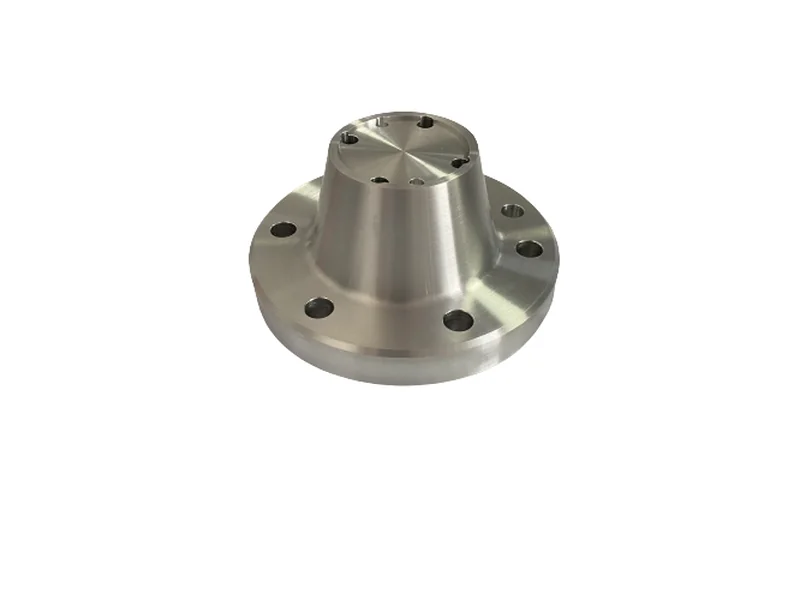
7075-T6 Aluminum Pylon: Tight Tolerances, a 16 µin Finish, and One Landed DDP Price
A US instrument maker sent an inch-unit drawing for a 7075-T6 pylon — a 0.0005 in geometric tolerance, a 16 µin finish on the outer diameter, and one landed DDP price. Both tight callouts were answered with a capability number, not a yes.
Read the case →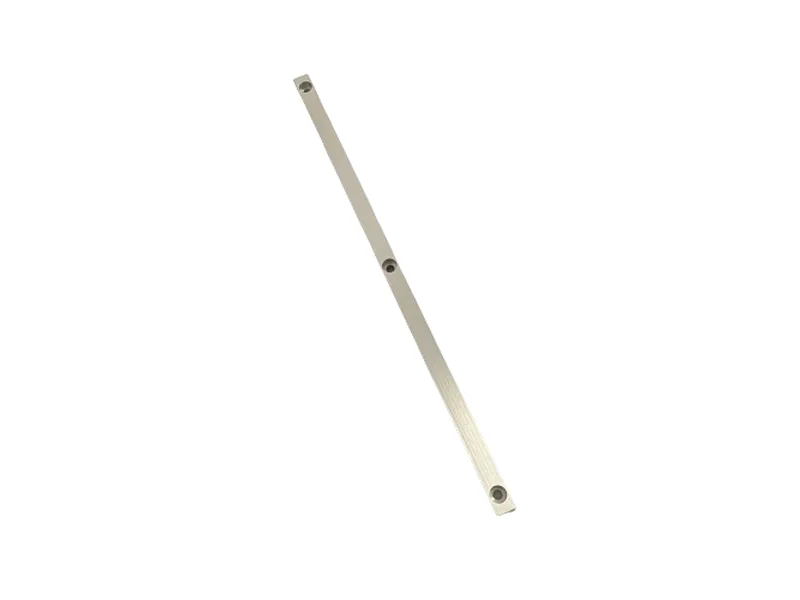
Three Threaded Turned Parts, No 2D Drawing — Quoted from the 3D Models
A UK damper maker sent three alloy-steel turned parts as STEP models only: twelve pieces, no drawing, no tolerance block, no grade. One provisional price for the family, with every assumption written next to the number.
Read the case →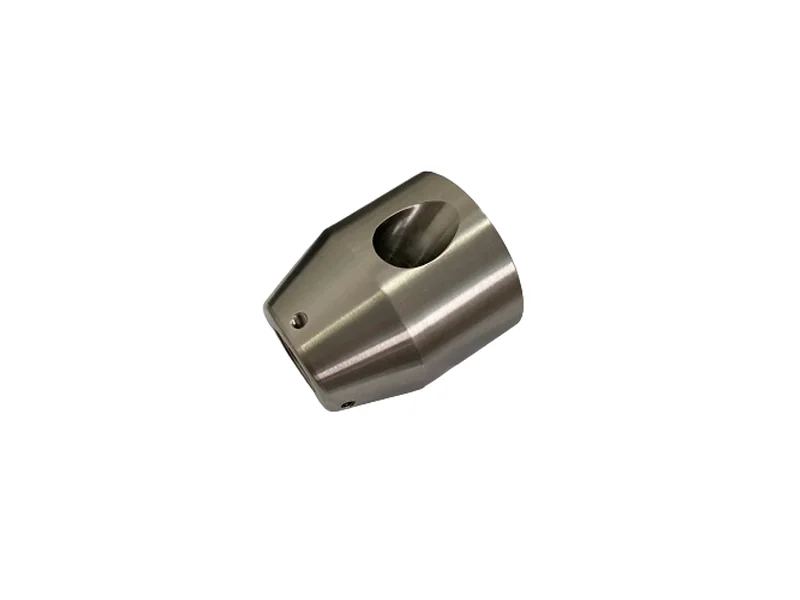
Four Inch-Unit Drawings, Fourteen Quantity Tiers — and One Part We Would Not Quote
Hermetic package components in 17-4PH, 316L and titanium, from 10 to 10,000 pieces. Three parts priced across every tier; the 316L body refused with one technical reason instead of a price that would not survive production.
Read the case →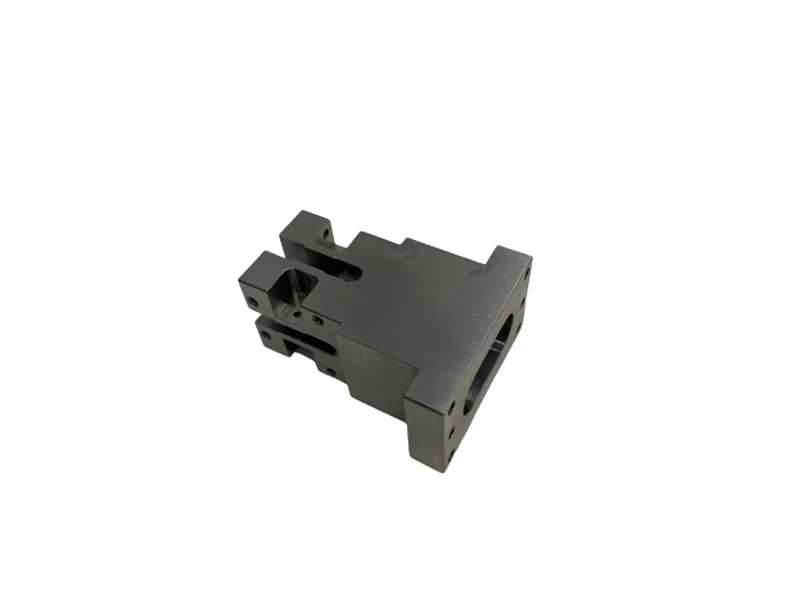
Eight Rotating Parts, Two Motor Series — One Package Price
Rotor yokes in 30CrMnSiA, aluminium rotors and stators, a carbon-steel axis: 560 pieces across two enquiries. One quotation, with dynamic balance and material certificates inside the price rather than added later.
Read the case →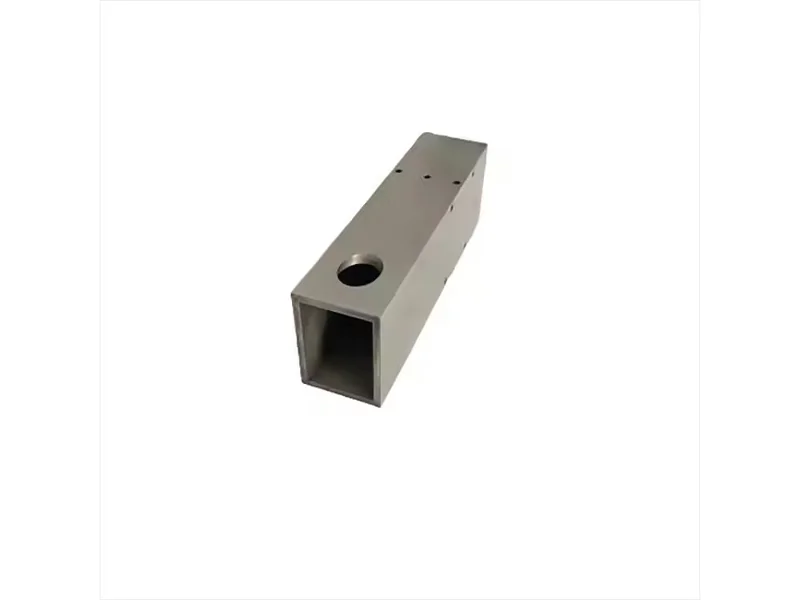
Three Parts, 3,000 Pieces a Month — and a Coating Thickness Nobody Had Specified
A monthly series of three parts: a Ø50 steel tube turned at both ends, an aluminium cap with an M27×1.5 thread, a milled aluminium block. Both galvanizing routes set out with what each one does to the finished diameter.
Read the case →One Drawing, Two Materials, One Hole Held to ±0.0005 in
An inch-dimensioned base in 17-4PH and 416 at 5,000 / 10,000 pieces — the hole decides the process route.
Read the case →
A Ø483 mm Housing, One Piece, and a Blank That Starts at 592 kg
A single-piece spindle housing with 0.01–0.02 mm bearing seats — where the honest answer is grinding, not turning.
Read the case →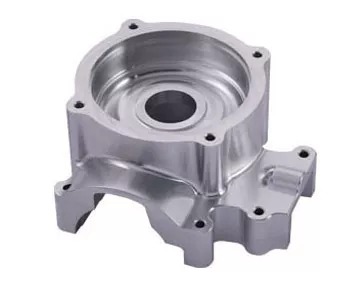
Automotive Housing CNC Machining — Aluminum A380, 5-Axis Milled
An automotive housing is a load-bearing enclosure that protects rotating assemblies, seals lubricants, and provides mounting points for sensors, conne
Read the case →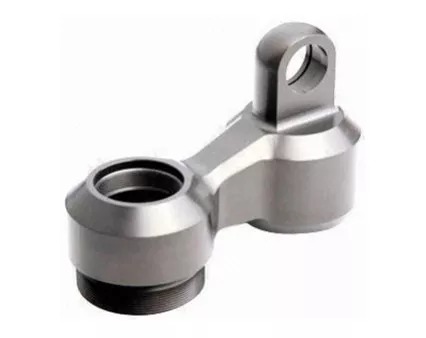
Connecting Rod Machining — Aluminum 7075, Turned & Ground
A connecting rod is the load path between piston and crankshaft in every reciprocating engine, and in motorsport applications it operates at continuou
Read the case →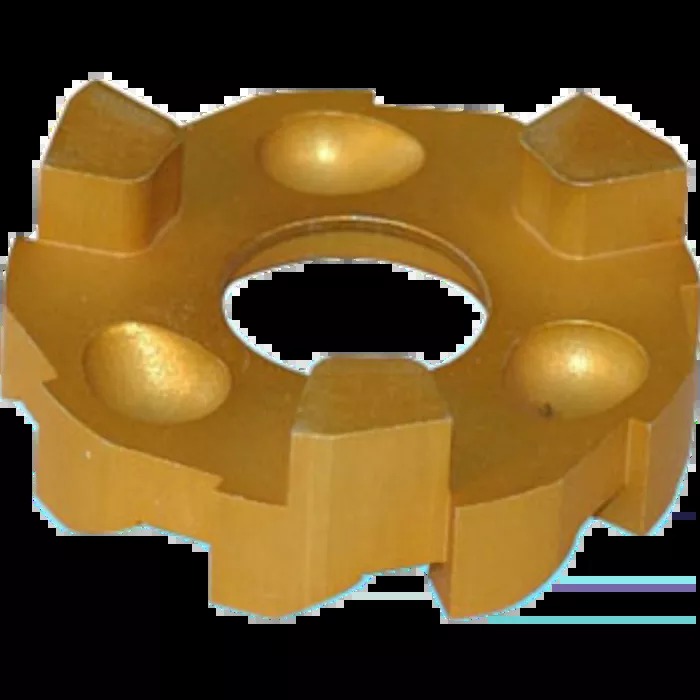
Copper Connector Machining — Brass, 5-Axis Milled
Connector bodies are the interface between a cable, a PCB or a device housing — and they have to do three things perfectly: align pins or contacts at
Read the case →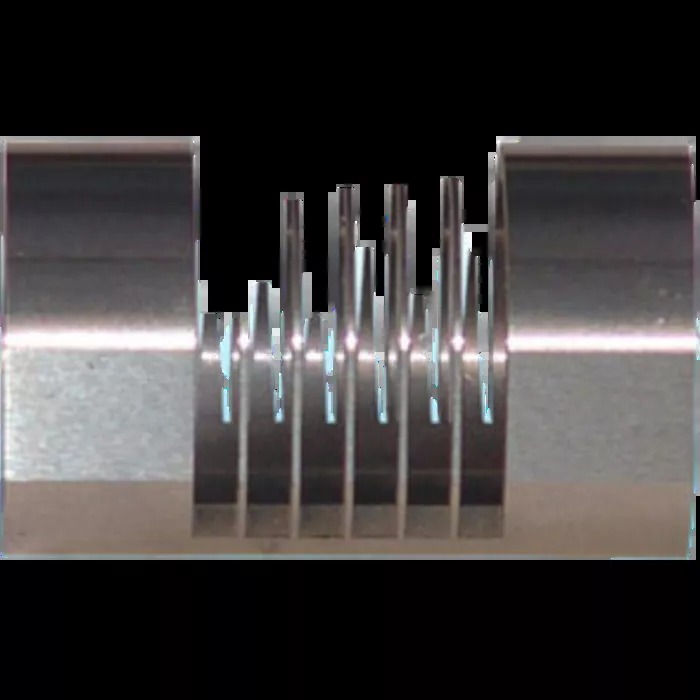
EDM Electrode Machining — Copper Tungsten, 5-Axis Milled & Turned
EDM electrodes are the tools that sink or burn geometry into hardened mold steel, carbide and other difficult-to-machine workpieces. The electrode its
Read the case →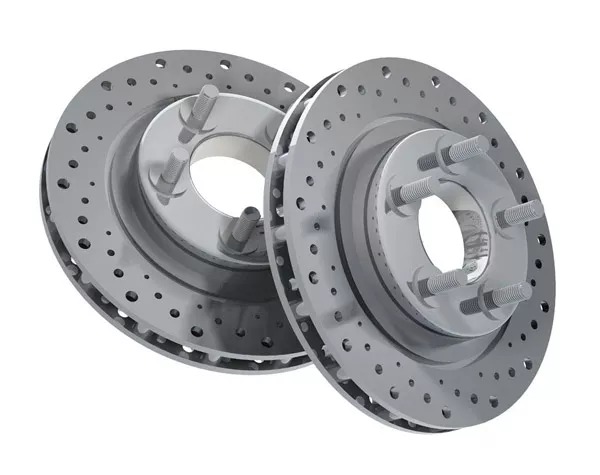
Friction Disc Machining — Stainless Steel 304, Turned & Milled
A friction disc is a torque-transmission component found in clutches, brakes and coupling assemblies. Two flat faces are pressed together under load;
Read the case →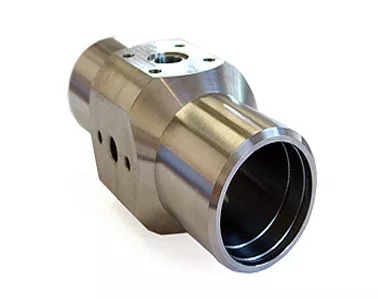
Hydraulic Housing Machining — Stainless Steel 316, 5-Axis Milled
A hydraulic housing is the body of a valve, manifold or cylinder that contains pressurized fluid. In hydraulic valve body machining, every internal pa
Read the case →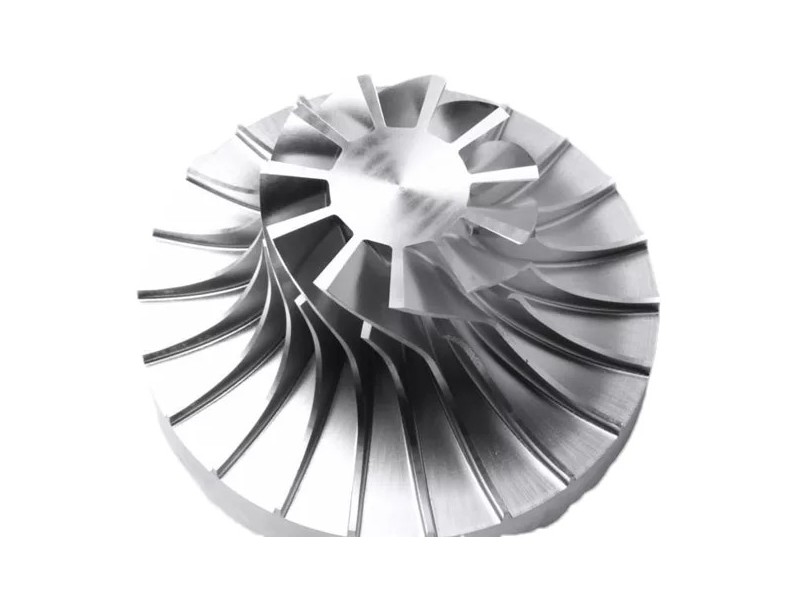
CNC Machined Impeller — Aluminum 7075, 5-Axis Milled & Turned
Impellers sit at the heart of pumps, compressors and turbomachinery — and they are one of the hardest parts to machine well. Each blade is a thin, fre
Read the case →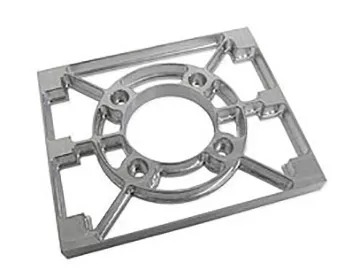
CNC Mounting Plate — Aluminum 6061, 5-Axis Milled
A mounting plate is the unsung backbone of every assembled machine. It carries bolted loads, aligns components that must sit exactly where the drawing
Read the case →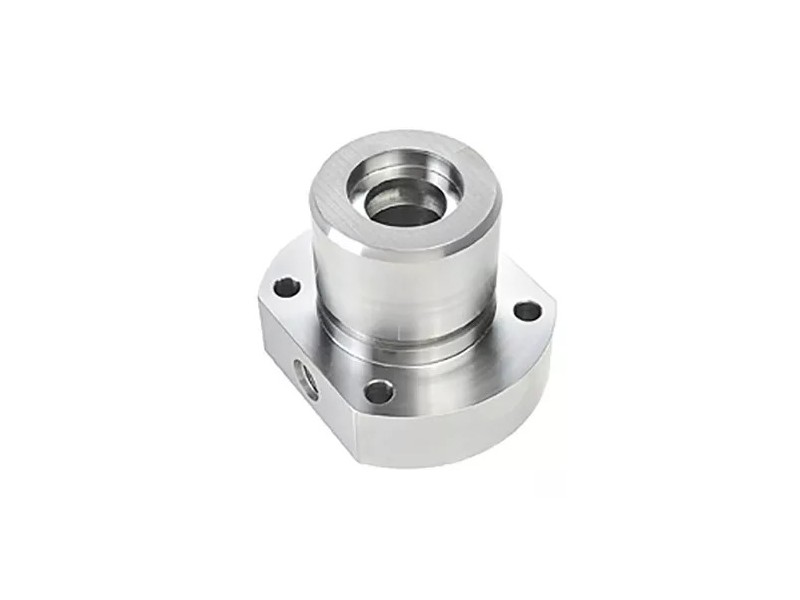
Precision Bushing Machining — Stainless Steel 304, Turned & Milled
A precision bushing is a simple-looking part that is unforgiving of small errors. It is a hollow sleeve — a bore, an OD, and a length — yet every feat
Read the case →
Vacuum Chamber Machining — Aluminum 6061, 5-Axis Milled & Turned
A vacuum chamber body is the pressure vessel that holds an evacuated volume. In semiconductor vacuum parts machining, these chambers house wafer stage
Read the case →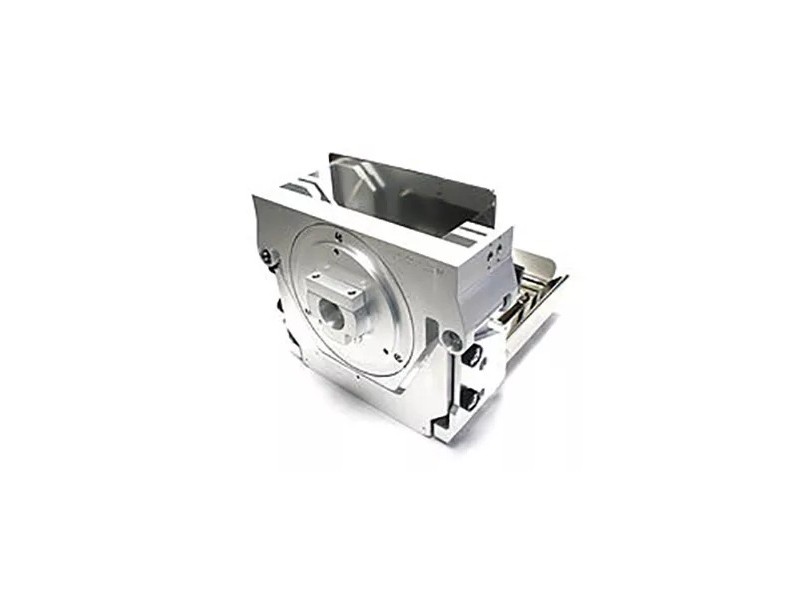
Vacuum Equipment Base Machining — Aluminum 6061, 5-Axis Milled
The base plate of a vacuum system is the structural foundation that every chamber, pump and instrument bolts onto. In semiconductor equipment machinin
Read the case →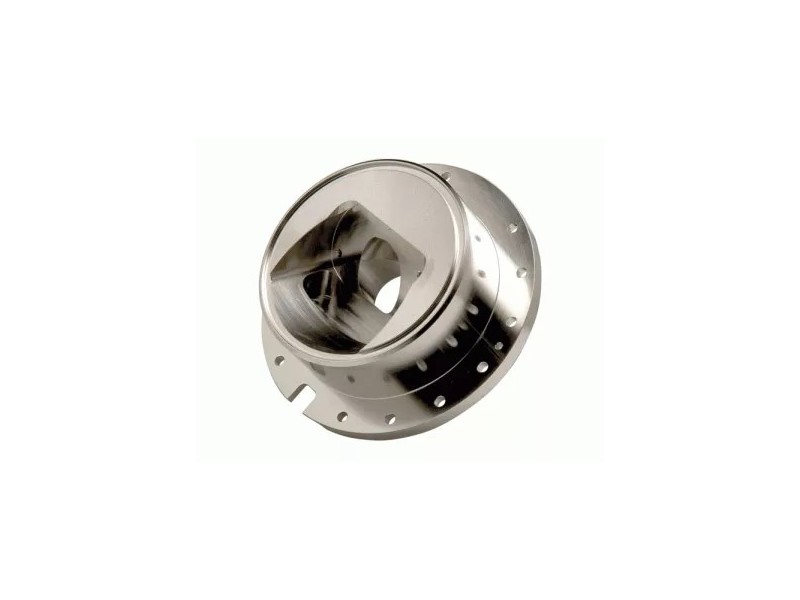
Vacuum Flange Machining — Aluminum 6061, Turned & Milled
A vacuum flange is the connection point where two sections of a vacuum system meet — and it is the place where leaks most often start. In KF flange cn
Read the case →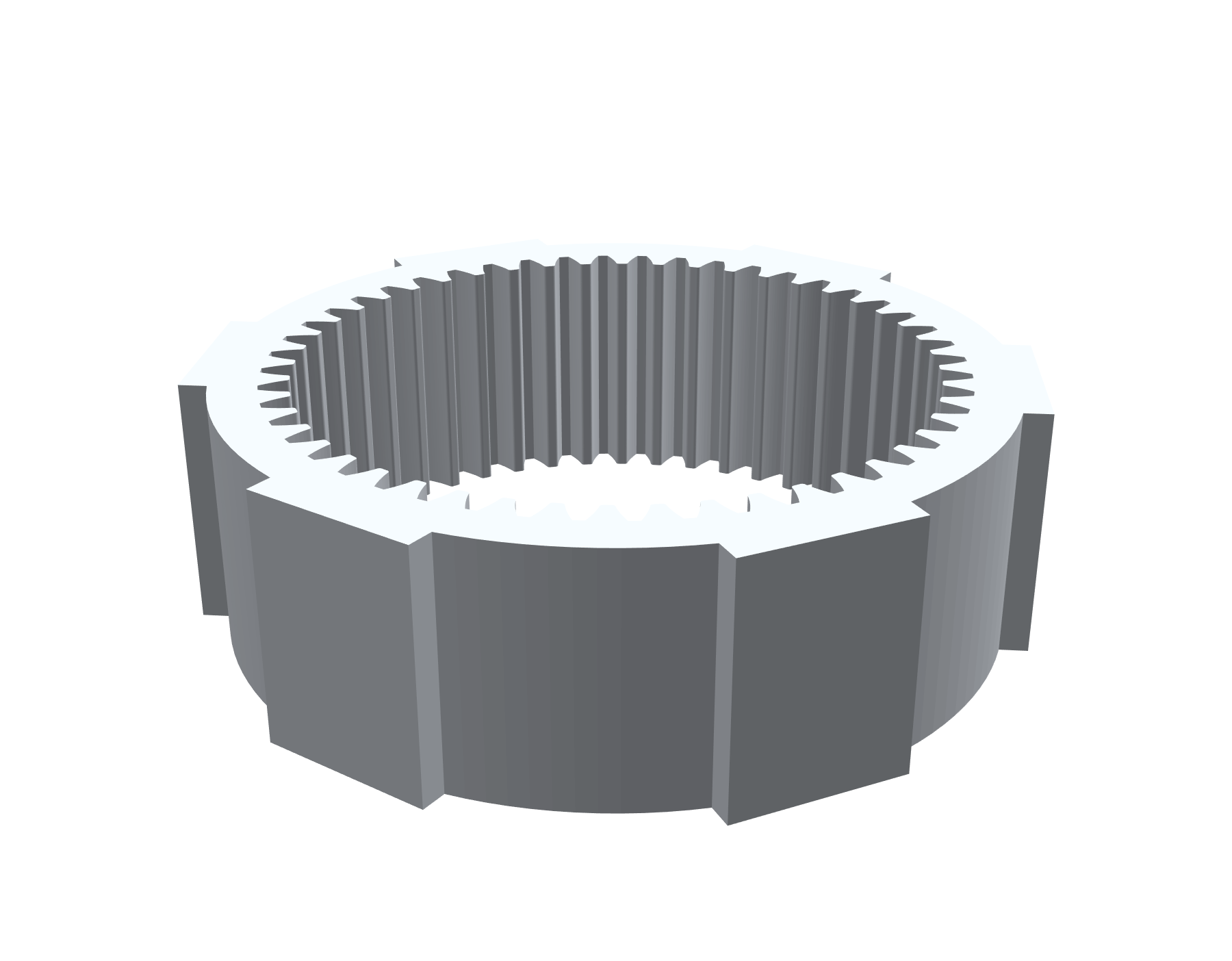
Robotics Reducer Components: How Early Drawing Review Turned a 29-Part RFQ Into a Fast Quote
A robotics OEM asked us to quote 29 aluminum parts for a new cycloidal drive family — with 3D models only and no finished 2D drawings. Here is how STE
Read the case →Have a Similar Part? Get a Quote in 48h
Send us your drawing — we review within 48h and return a quote with lead time. No minimum order quantity.
Get a Quote →What these cases prove
What do these case studies actually show?
Twenty parts machined in our shop, each with the material, the process route and the tolerance we held — including one part we declined to quote and why. They are written from the shop-floor side, not as marketing summaries.
Can I see inspection evidence before I order?
Yes. We send a CMM report with measured values and an FAI report from a comparable part before an order, and every shipment carries the CMM report, FAI and material certificate for the parts you buy.
Can you quote from a 3D model if I have no 2D drawing?
Yes — one case study covers three turned parts quoted from STEP models only, with every assumption written next to the price. Without a 2D drawing the price stays provisional until the drawing is confirmed.