
Most enquiries are priced. This one was reviewed first, part by part, because one of the four drawings described something that cannot be checked after machining — and a part nobody can inspect is a part nobody can promise. The other three were priced across every quantity tier the customer listed.
At a Glance
| Industry | Hermetic packages for RF, microwave, power and laser-diode devices (Singapore) |
|---|---|
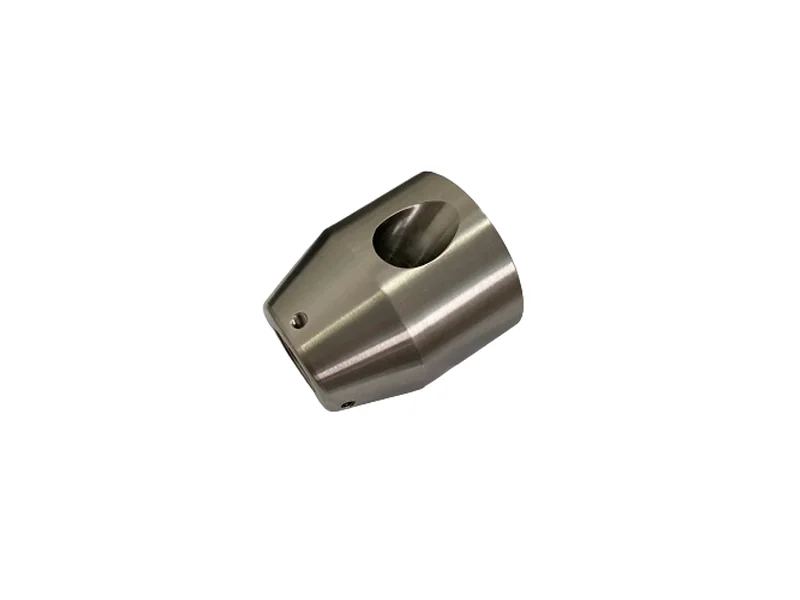
| Parts | Four machined components — a 17-4PH base, two 316L bodies, a titanium hex part |
| Materials | 17-4PH stainless (hardened or annealed), 316L stainless to ASTM A276, titanium Grade 2 annealed |
| Drawings | Inch units to ASME Y14.5 with GD&T; general tolerance block .XX = ±.01 in, .XXX = ±.005 in |
| Key features | Pipe ports in two thread standards, O-ring face-seal grooves, 4-40 UNC-2B and 5/16-24 UNF-2B threads, a 1/4-28 UNF-2B thread, a milled slot .0125 in wide × .005 in deep |
| Quantity tiers | Fourteen tiers across the four parts, from 10 to 10,000 pieces |
| What we returned | A feature-by-feature review of all four drawings; three parts quoted across their tiers; one part declined with its reason; one question back on the shipping term |
| Trade term | EXW Dongguan or DDP — the customer's choice decides the freight figure and the lead time |
The Customer
A precision engineering company in Singapore that supplies machined components into hermetic packages — the sealed metal housings that protect RF, microwave, power and laser-diode devices. They machine their own parts and outsource what their capacity cannot cover, and their drawings are prepared in inches to ASME Y14.5 with GD&T frames throughout.
The Challenge
- The tolerance block is its own trap on an inch drawing: .XX = ±.01 in is loose, .XXX = ±.005 in is five times tighter, and the two appear on the same sheet separated by one decimal place.
- Fourteen quantity tiers arrived on one enquiry. A single unit price is meaningless between 10 pieces and 10,000, because each tier carries its own share of setup.
- The 316L body has ports and cross holes that intersect inside the material. The problem is not the tolerance — it is the burr at the intersection, which cannot be inspected once the part is closed up. Nobody can then prove the part is clean.
- Three materials in one enquiry behave differently: 316L work-hardens and holds heat, 17-4PH changes character between annealed and hardened states, titanium Grade 2 springs back and galls.
- The finish note applies to every surface not otherwise specified, so an exterior Ra 1.6 µm on 316L decides whether a face is turned or has to be polished — and that decision lives in the price.
Our Approach
- Inches converted per feature, not per drawing. .XX reads as ±0.254 mm, .XXX as ±0.127 mm, and the sizes called out explicitly at ±.001 in and ±.002 in as ±0.025 mm and ±0.050 mm. Three of the four drawings carry the tight band, and the price follows the tight band where it applies.
- Materials taken one by one. 17-4PH, 316L to ASTM A276 and titanium Grade 2 are three different cutting strategies with three different tool lives — treating them as "stainless and titanium" would have produced a number that fits none of them.
- Sealing faces treated as sealing faces. O-ring grooves and port faces get controlled deburring, because a burr at a seal face is a leak rather than a cosmetic defect — and the drawing's own edge-break callouts leave no room for generous hand work.
- Small threads in 316L quoted as a managed risk. Ten blind 4-40 UNC-2B holes with a limited drill depth mean tap selection, depth control and go/no-go gauging; a broken tap in a near-finished 316L part is scrap.
- One quantity table instead of one number. Every tier the customer listed was priced, from the 10-piece tier to the 10,000-piece tier, with no minimum order quantity on any of them.
- One part declined — in writing, with a reason the customer can act on. The internal ports of the 316L body intersect inside the material and the burrs they leave cannot be fully inspected, so consistent quality across 10 to 1,000 pieces could not be promised. Saying that before the order is cheaper for both sides than shipping a batch that fails later.
Where the Drawing Met the Machine
| Drawing callout | What we told the customer |
|---|---|
| Inch tolerance block: .XX = ±.01 in, .XXX = ±.005 in (≈ ±0.127 mm) | Converted per feature. The tight band is measured with 0.001 mm instruments or on the CMM, not with a caliper — one decimal place on an inch drawing decides the whole part. |
| 17-4PH base in H900 / H1025 / H1075 or annealed condition | Quoted against the annealed condition. The hardening states are available and change the machining, so they are quoted on request instead of being quietly assumed. |
| 316L to ASTM A276, exterior Ra ≤ 63 µin (1.6 µm), interior ≤ 125 µin (3.2 µm) | Quoted as turned and checked. A surface that has to be lapped or polished to reach 1.6 µm is a separate operation with its own price. |
| 8 × 4-40 UNC-2B × .250 in deep, blind, drill depth limited | Drilled and tapped blind as drawn — no breakthrough — with tap and depth control and go/no-go gauging. In 316L a broken tap in a finished part is scrap. |
| 316L body with intersecting internal ports and cross holes | Not quoted. The burrs at the internal intersections cannot be fully inspected, so consistent quality from 10 to 1,000 pieces could not be promised. A revision that avoids the intersection is re-evaluated immediately — and one came. |
| Titanium Grade 2 with 1/4-28 UNF-2B, slot .0125 in wide × .005 in deep | Quoted. Titanium is regular work here; the shallow slot is a fragile cutter path, so tool selection and depth are controlled and the feature is measured. |
The refusal is part of the quotation. A supplier who prices a part they cannot inspect has either not read the drawing or intends to argue about it after the batch is made. Here the customer got three usable prices and one straight answer, and could re-plan the fourth part instead of discovering the problem in incoming inspection.
What the Customer Received
| Per-feature review | All four drawings converted from inches and read feature by feature against capability |
|---|---|
| Three parts quoted | Every quantity tier priced, so the 10-piece tier and the 10,000-piece tier can be compared directly |
| One part declined | Refused in writing with a single technical reason, instead of a price that would not survive production |
| Material answers | 17-4PH, 316L to ASTM A276 and titanium Grade 2 confirmed for these specific parts, with the hardening states called out |
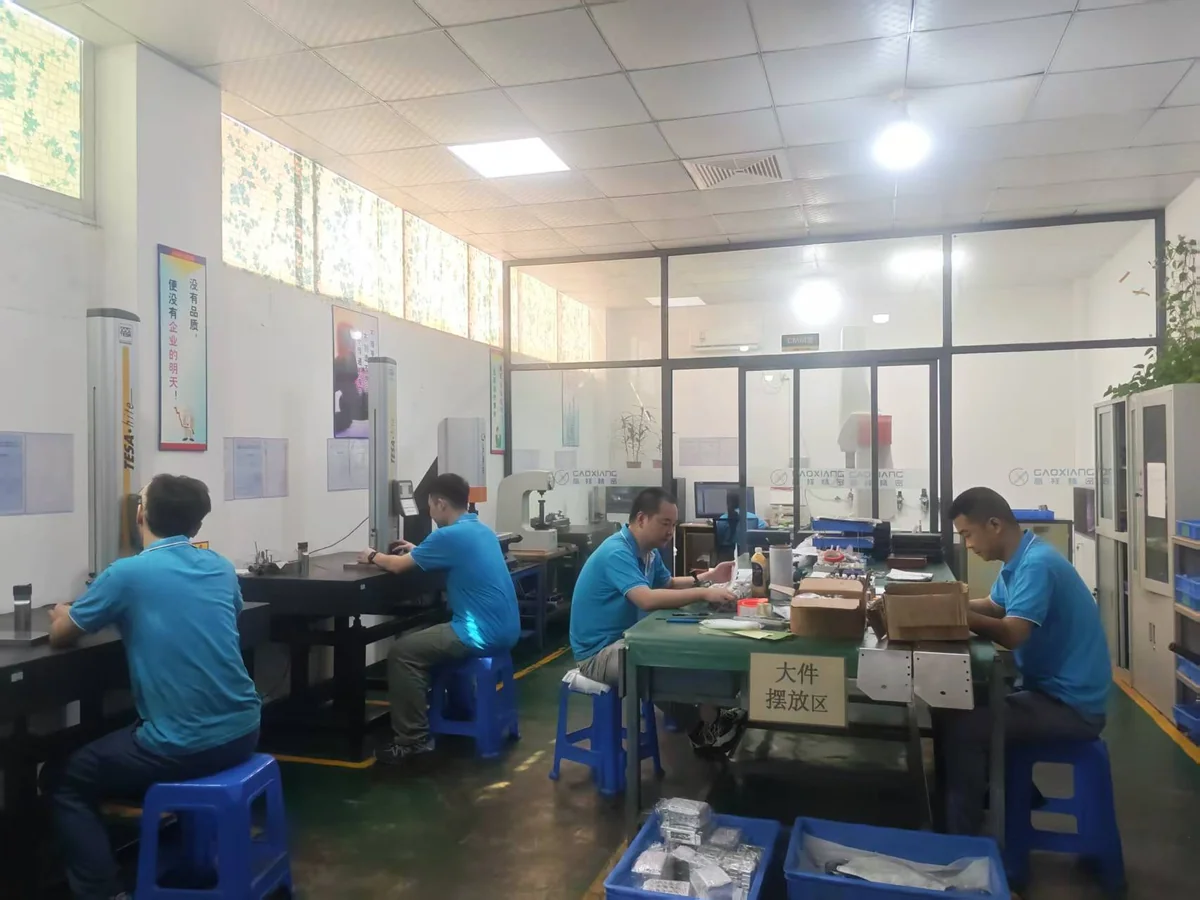
| Inspection | Go/no-go gauging on the threads, roughness measurement on the sealing surfaces, reports on request |
| One question back | EXW Dongguan or DDP — freight and lead time are fixed once the customer chooses |
Status
Three of the four parts were quoted across their quantity tiers, and the 316L body was declined with the reason above. The open item on our side is the shipping term — EXW Dongguan or DDP — which decides the freight figure and the lead time, and that question is with the customer.
A revised version of the declined body has since arrived, with the two port standards split into separate drawings. It went back through the same feature-by-feature review — the seal groove, the small tapped holes and the narrow bore into the cavity were the first items on the list — and it is in our pricing cycle.
Frequently Asked Questions
Can you work from inch-unit drawings and ASME Y14.5 tolerances?
Yes. Inch drawings are read as issued — third-angle projection, imperial callouts, GD&T frames — and converted to metric for the shop floor and for our own inspection records. The part is not re-modelled in metric and then quoted from that model: the drawing stays the reference, and every conversion is written down feature by feature.
Can you machine 17-4PH and other hardenable stainless steels?
Yes. What decides the price is the condition rather than the grade name: annealed, H900, H1025 and H1075 machine very differently, and this drawing allowed any of them. We quote one condition clearly and price the others when you choose, instead of blending them into a single number that fits none.
Can you machine titanium?
Yes — Grade 2, Grade 5 and other common grades are regular work for us. Titanium galls, springs back and holds heat at the cutting edge, so tooling and setup cost more than the same part in stainless steel. Name the grade and the finish requirement and it is priced as the material it actually is.
Will you decline a part you cannot make to specification?
Yes — it happened in this case. The 316L body with intersecting internal ports was not quoted, because the burrs inside the intersection cannot be inspected after machining and consistent quality across the quantity range could not be promised. A price for it would have been a promise we could not keep, and the customer needed to know that before ordering.
What is the minimum order quantity for machined components?
There is none. On this enquiry the smallest tier was 10 pieces and the largest 10,000, and every tier on the quotation was orderable. Quantity changes the unit price — it does not decide whether we take the work.