
Eight part numbers, two motor series, one alloy that is written to a Russian standard. The first question on an enquiry like this is not what the parts cost — it is whether the material can be bought, whether the parts can be held to running true, and whether anyone will believe the paperwork. Only then does a number mean something.
At a Glance
| Industry | Battery energy storage systems, brushless electric motors and solid-state switching equipment (Russia) |
|---|---|
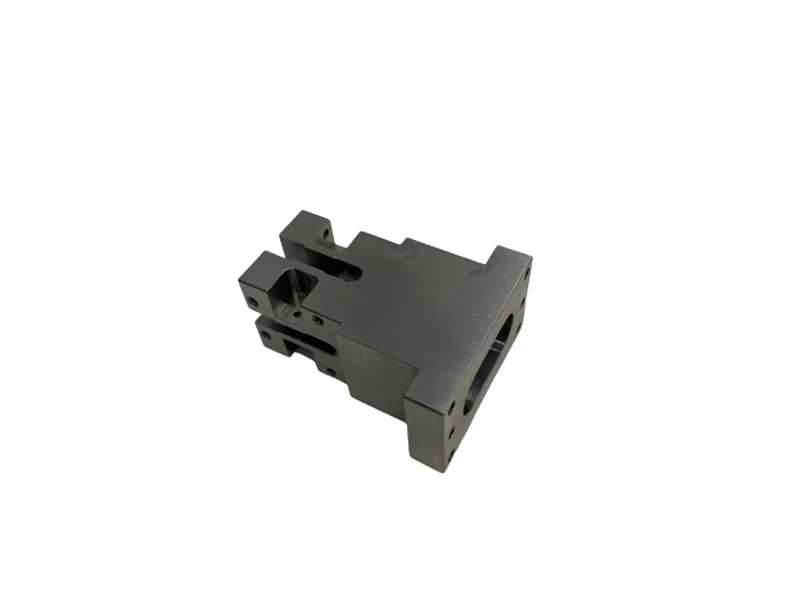
| Parts | Eight part numbers across two motor series — rotor yokes, rotors, stators and a rotor axis |
| Materials | 30CrMnSiA alloy steel (yokes), aluminium (rotors and stators), carbon steel (axis) |
| Total quantity | 560 pcs — 400 pcs (4 part numbers × 100) in one series and 160 pcs (4 × 40) in the other |
| Requirements | Dynamic balance verification on the rotating parts; material certificates with heat and lot numbers; dimensional reports |
| Lead time | 15 days, quoted against the customer's requested date |
| What we returned | One quotation covering both enquiries: eight part numbers grouped by material, with balancing and documentation inside the price rather than as options |
| Trade term | EXW Dongguan; freight estimated from the delivery address; invoicing in EUR or RMB |
The Customer
A Russian developer and manufacturer of battery energy storage systems, brushless motors for electric drives, and solid-state switching equipment. They design in-house and buy the machining, and rotating parts are recurring items for them — which is why the enquiry covered two motor series at once instead of a single part.
The Challenge
- The yoke material is written to a Russian standard — 30CrMnSiA. Before a price means anything, the sourcing question has to be answered: what equivalent is available, and does the customer accept it?
- The parts rotate. A rotor yoke or an axis that is dimensionally perfect but out of balance is still unusable in the customer's assembly, so the balance requirement has to sit inside the price, not beside it.
- The same function is not the same process. In one series the yoke and axis were listed as turned parts; in the other, the equivalent functions were listed as milled. Pricing a category instead of a drawing is how a quotation fails at the production meeting.
- Two enquiries, 560 pieces, eight part numbers, at 100-piece and 40-piece tiers. Priced one at a time and then totalled, the customer gets a list rather than a decision.
- The documentation is part of the product here: certificates with heat and lot numbers and dimensional reports are expected deliverables, not paperwork to be added later.
Our Approach
- Material first. 30CrMnSiA was mapped to the equivalent grade that is normally available from stock, so the price rests on material that can actually be bought this month rather than on a special mill order.
- Process per part number, not per family. Each yoke, rotor, stator and axis was read against its own drawing; the two series machine differently even where the function looks identical, and the quotation follows the drawing.
- Balance and documents built in. Dynamic balance verification on the rotating parts, material certificates with heat and lot numbers, and dimensional reports are deliverables of the order and are priced inside it.
- One package instead of two quotations. Both enquiries were quoted together, grouped by material, with the two series shown separately — so the customer can compare one order against two, with the combined 560-piece figure standing next to the series figures.
- Terms that fit how the customer buys. EXW Dongguan with freight estimated from the delivery address once it is fixed, and invoicing in EUR or RMB depending on the entity that places the order.
- Follow-up on the two questions that actually block the order: the delivery destination, so the freight figure can be locked, and the target unit cost — the second one being an invitation to review the process rather than simply to cut the number.
Where the Enquiry Met the Shop
| What the enquiry said | What we did |
|---|---|
| 30CrMnSiA alloy steel for the yokes | Mapped to the equivalent grade normally available from stock, so the price does not depend on a special mill order; the grade we intend to use is named on the quotation |
| Aluminium rotors and stators | Priced as milled parts — the two series have different geometry and different quantity tiers |
| Rotating parts that have to run true | Dynamic balance verification is part of the quotation, not a paid extra |
| Certificates expected with the parts | Material certificates with heat and lot numbers and dimensional reports are named deliverables of the order |
| Four parts listed as milling in one series that read as turning work | Process confirmed per part number against the drawing — a mislabelled process is a price that fails at the machine |
| 560 pcs arriving as two enquiries (400 + 160) | Quoted as one package of eight part numbers grouped by material, with the combined figure shown next to the two series figures |
Rotating parts are unforgiving in a specific way: the tolerance can be perfect and the part still be useless. That is why the balance requirement, the certificates and the dimensional reports were treated as part of the product from the start — an enquiry that treats them as afterthoughts ends up with a cheap quotation and an expensive second conversation.
What the Customer Received
| One quotation, two enquiries | Eight part numbers grouped by material, with the 560-piece package figure shown alongside the two series figures |
|---|---|
| Balance and documentation | Dynamic balance verification, material certificates with heat and lot numbers, dimensional reports — inside the price |
| Material answer | 30CrMnSiA mapped to an available equivalent, with the grade named on the quotation |
| Lead time | 15 days stated against the customer's requested date |
| Freight | Estimated from the delivery address and to be fixed once the destination is confirmed |
| Invoicing | EUR or RMB, matched to the entity that places the order |
Status
The quotation went out covering both enquiries as a single package of eight part numbers, with the balancing and documentation requirements inside the price. A follow-up message restated the invoicing options, the certificates and the balance report, and asked for the two answers that decide the rest: the delivery address, so the freight figure can be fixed, and the target unit cost, so the process can be reviewed against it.
Both of those answers sit with the customer. The quoted structure is ready to be run against them: if the destination stays as it is, the freight is a line to confirm; if the target cost is below the quotation, the conversation is about the process — blank size, setup count, lot splitting — rather than about the margin.
Frequently Asked Questions
Can you machine Russian-standard steels such as 30CrMnSiA?
Yes. The grade maps to an equivalent that is normally available from stock here, so the quotation is built on material we can actually buy, and the equivalent we intend to use is named on it. If your drawing demands a mill certificate against 30CrMnSiA itself, say so at enquiry stage — the sourcing route changes with that requirement.
Do you supply balance reports for rotating parts?
Yes. Rotating parts are verified for dynamic balance, and that verification is part of the quoted scope rather than an add-on. If the drawing names a balance quality grade or a permissible residual unbalance, that is what we verify against — send it with the enquiry so it is priced rather than argued about later.
Do you provide material certificates with the parts?
Yes, with heat and lot numbers for the material actually used. Mention it at enquiry stage so the certificate sits inside the quotation instead of arriving as a change order after the order is placed.
Can you invoice in euros, or only in RMB?
Both. The invoicing currency is matched to the entity that places the order and the price structure does not change with it. Name the ordering entity at enquiry stage and the quotation is issued accordingly.
Is there a minimum order quantity for batches of 40 pieces?
No. One series in this enquiry ran at 40 pieces per part number and the other at 100, and both were quoted. Quantity changes the unit price; it does not decide whether the work is taken on.